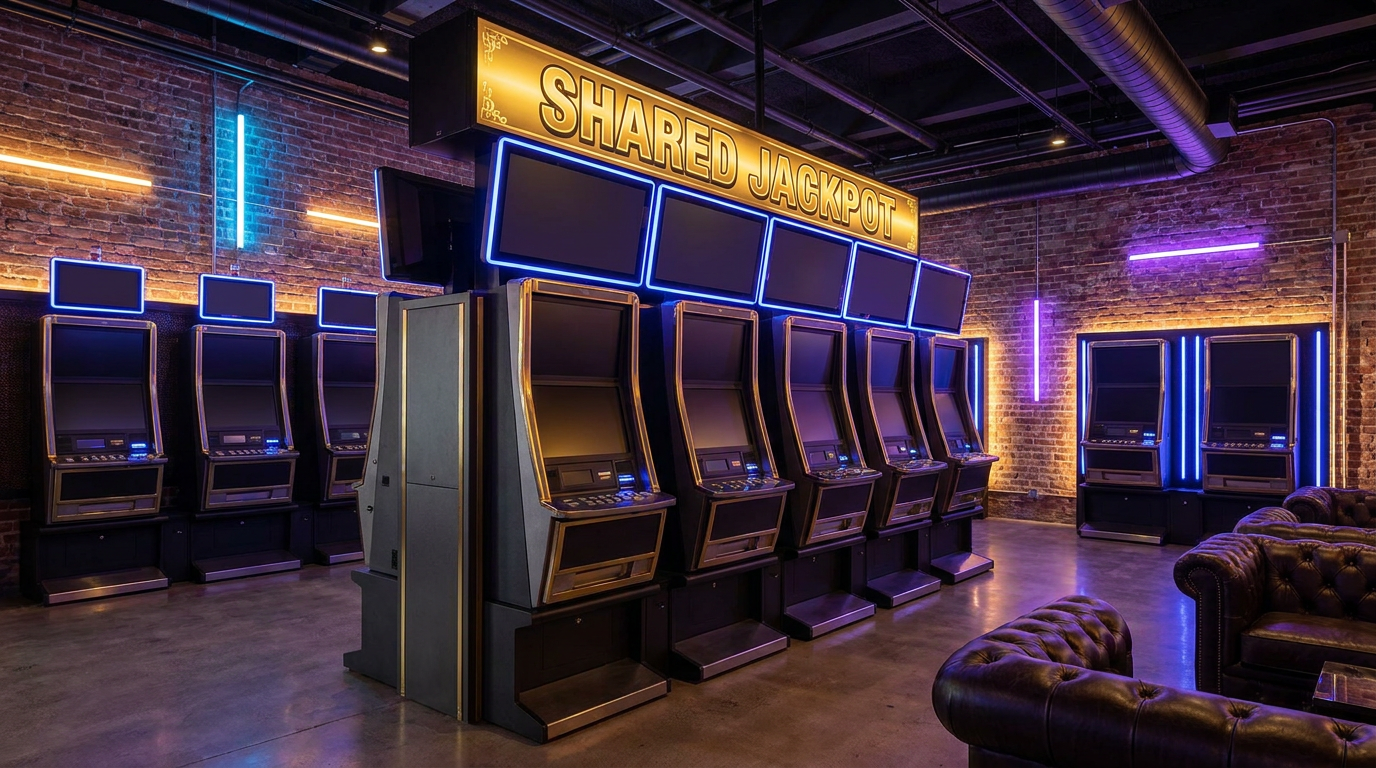
Shared Jackpot systems represent the most significant revenue-boosting technology for small-scale arcade operators in 2026. By linking up to 50 machines in a local area network (LAN), operators can offer “life-changing” progressive prizes that were previously only available in large casinos, drastically increasing player retention and hourly spend.
For small arcade rooms, convenience stores, and retail gaming corners, the challenge is always the same: how do you keep a player at the machine when the prize pool is limited? In a standalone environment, the jackpot is capped by the individual machine’s play. If a player sees a $200 jackpot, they might play for twenty minutes. If they see a $5,000 jackpot shared across five machines, they might play for two hours. Enter the Shared Jackpot System-a game-changing ROI tool that levels the playing field for small operators in 2026.
What is a Shared Jackpot System? The Technical Blueprint
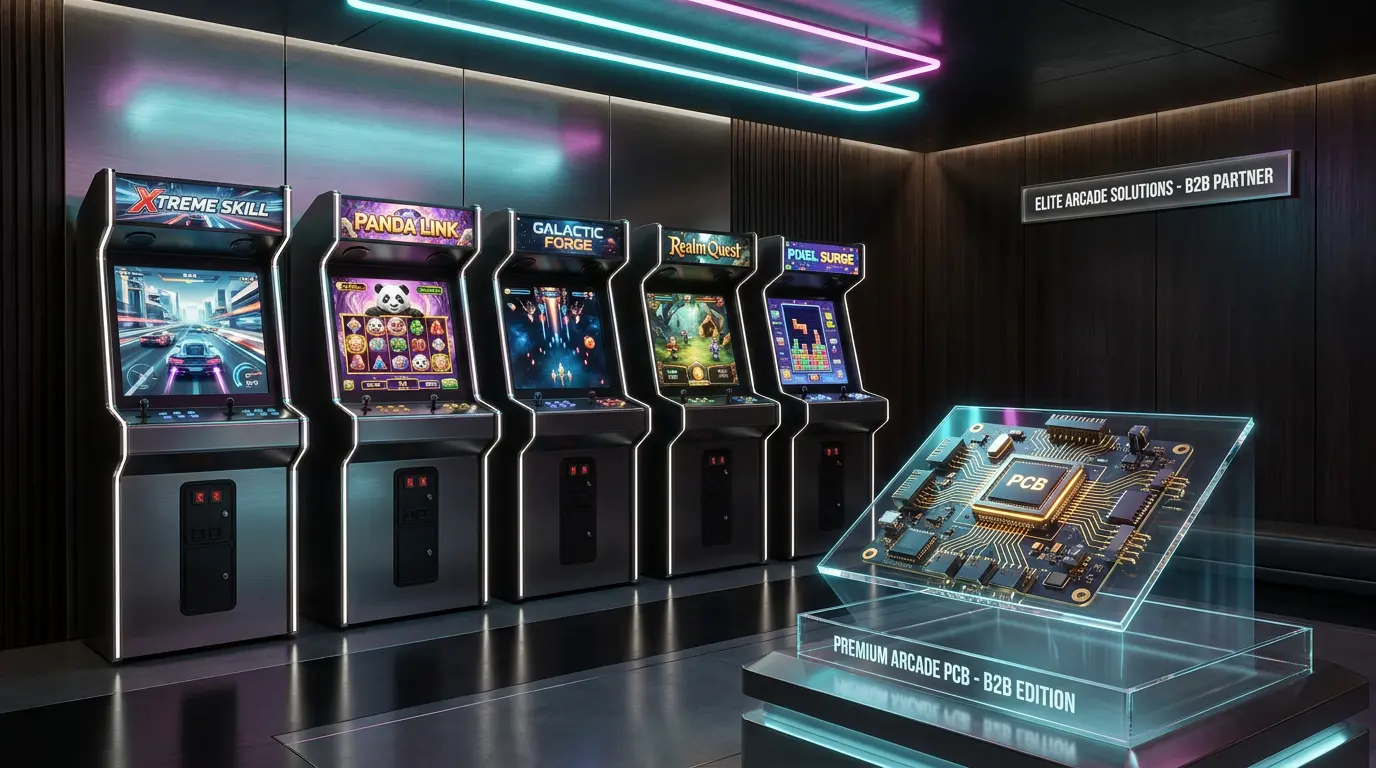
Technically, a Shared Jackpot system links multiple game boards (such as those from the Panda Link, Xtreme Skill, or Xtreme Link series) via a local network. This is not a cloud-based system that depends on high-latency internet; it is a hardwired LAN (Local Area Network) setup. A dedicated “Jackpot Controller Box” acts as the brain of the operation. A small, configurable percentage of every play (usually 1-3%) on every connected machine is funneled into a central, “progressive” pool.
This pool is displayed prominently on all connected machines or a dedicated overhead display. The visual of the numbers ticking upward in real-time creates a psychological “pull” that standalone machines simply cannot match. In the 2026 gaming landscape, where players are more sophisticated, this transparency and the scale of the prize are major draws.
The Psychology of the “Big Win” and Player Retention
Players are naturally drawn to larger numbers. A machine with a $500 top prize is less attractive than a bank of five machines sharing a $2,500 jackpot. Even if the odds of winning are mathematically similar, the perception of value is much higher. For the operator, this translates into several key performance indicators (KPIs):
- Increased Dwell Time: Players stay longer to “watch the jackpot grow.” They are more likely to stay until the jackpot hits, especially if they see it reaching a historical “sweet spot.”
- Higher Turnover: The excitement of a growing prize encourages faster play. Players often increase their bet amount as the jackpot climbs higher, seeking to maximize their chance of triggering the big win.
- Repeat Business: A shared jackpot creates a local “gaming community.” Players return to see if the “big one” is still there or if someone they know won it. It transforms your location from a convenience stop into a gaming destination.
The ROI Breakdown: Where the Profit Comes From
The return on investment for a Shared Jackpot system is realized in three primary areas, which we have analyzed through 2024-2025 performance data:
1. Revenue per Machine (RPM) Growth
Data from retail installs shows that rooms implementing a LAN-based shared jackpot see an average 15-25% increase in RPM compared to standalone setups. This isn’t just because more people play; it’s because the same people play more intensely. The “velocity” of the prize pool is higher, which triggers a feedback loop of excitement and wagering.
2. Low Implementation and Maintenance Costs
Unlike Wide Area Progressives (WAP) used by massive casino chains, which require expensive monthly subscriptions and specialized server maintenance, a LAN-based Shared Jackpot is a “set-and-forget” solution. Proskillgames offers a “Plug-and-Play” controller that requires no specialized IT knowledge. It’s a one-time capital expense (CapEx) with zero recurring fees. Most operators find that the increased revenue covers the cost of the hardware within the first 30 days of operation.
3. Competitive Differentiation in Saturated Markets
If the convenience store down the street has five standalone machines and your location has a linked jackpot bank with a glowing $5,000 banner, you win the customer. In a saturated market like Pennsylvania or Kentucky, the Shared Jackpot is a marketing tool that pays for itself. You aren’t just selling a game; you are selling a high-stakes experience.
Advanced Promotional Tools: Making the Jackpot Work for You
Modern shared jackpot systems from developers like Proskillgames include more than just the jackpot itself. They include operator tools to drive traffic during slow periods. For example, you can set “Happy Hour” multipliers where the jackpot contribution is doubled for a few hours, or “Must-Hit-By” limits that guarantee the jackpot will trigger before it reaches a certain amount. These tools give the operator the power to manipulate floor traffic and ensure the room is always busy.
Standalone vs. Linked: The Numbers Don’t Lie
Let’s look at a hypothetical scenario for a 5-machine room:
– Standalone Setup: 5 machines, each with a $500 max win. Average daily revenue: $100/machine = $500 total/day.
– Linked Setup: 5 machines sharing a $2,500 progressive. Average daily revenue: $125/machine = $625 total/day.
– Monthly Difference: $3,750 additional revenue.
Over a year, that small 25% boost adds up to $45,000 in additional profit, far exceeding the initial cost of the linking hardware (usually under $1,000).
Installation and Technical Simplicity
One of the biggest myths is that jackpot systems are hard to maintain. Today’s systems are designed for the “non-techy” business owner. You connect the boards via standard Ethernet cables to a central controller, set your contribution percentages (e.g., 1% for the Grand, 0.5% for the Minor), and the software handles the rest. Real-time auditing ensures that every penny is accounted for, protecting your margins from any discrepancies.
Future-Proofing for 2026: The Rise of Social Gaming
As we look toward 2026, the trend in the US skill market is moving toward “Social Gaming” in retail environments. Players want to feel like they are part of a community. A Shared Jackpot creates that community atmosphere. When one person wins, the whole room knows-the cabinets flash, the sound effects trigger, and the excitement is contagious. This “social proof” is the most powerful marketing tool an arcade operator has.
Conclusion: The Necessity of Connectivity
Small arcade rooms can no longer afford to operate machines in isolation. The ROI of a Shared Jackpot system isn’t just in the dollars collected-it’s in the competitive advantage, player loyalty, and the high-energy atmosphere it builds. By investing in a linked system today, you are transforming your machines from individual units into a powerful, synchronized revenue engine. In 2026, connectivity isn’t an option; it’s the standard for success.
Ready to link your machines and boost your revenue?
Explore our Shared Jackpot solutions and get professional advice on the best configuration for your location. Our US-based team is ready to help you build your network.