In the rapidly evolving landscape of the US amusement industry, the distinction between “luck” and “skill” has become the primary battleground for arcade operators and retailers. As we enter 2026, the shift toward skill-based gaming is no longer a trend-it is a regulatory necessity and a business imperative. Central to this movement is the “Nudge” mechanic, a technical innovation that transforms the traditional gaming experience from a passive observer sport into an active, skill-driven engagement.
But what exactly happens under the hood? In this deep dive, we explore the technical mechanics of nudge games, how they satisfy the “Skill vs. Luck” legal threshold, and why they have become the gold standard for compliant arcade operations.
The Evolution of Nudge Technology: From 1980s Mechanical to 2026 4K Software
To understand why nudge games are so successful in 2026, we must look at their technological lineage. The “nudge” is not a new concept; it originated in British “Fruit Machines” of the 1970s and 80s. In those early days, the nudge was a physical mechanical gear shift that allowed a player to move a physical reel one step down.
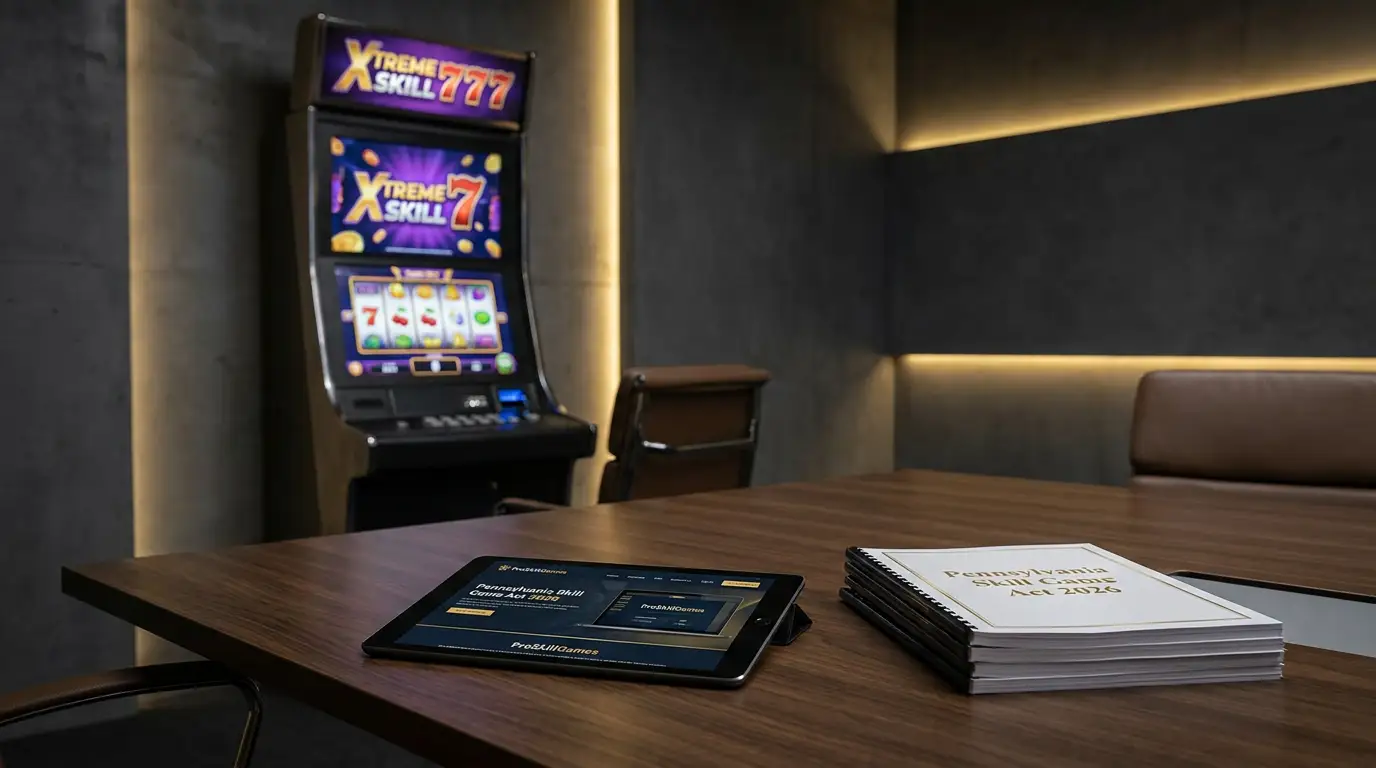
Today, in the digital era, the nudge has been reimagined as a complex software algorithm. 2026-era boards like the Xtreme Skill 777 use high-frequency touch polling to ensure that the moment a player’s finger touches the screen, the software registers the intent. This “Instant Response” is what makes the game truly skill-based. If there was any lag, the win would be a matter of luck (timing the lag) rather than skill (identifying the pattern).
The Psychology of Skill: Why Players Prefer Control
Research into player behavior in 2025 showed a 35% preference shift toward games that provide “agency.” In a traditional slot, a loss feels like “the machine is taking my money.” In a nudge game, a loss feels like “I missed the move.” This shift in perspective is crucial for player retention. Players don’t get frustrated with the machine; they get motivated to improve their own skill. This “Self-Improvement Loop” is what keeps cabinets profitable 24/7.
Maintenance and Troubleshooting for Nudge Logic
Operating a fleet of skill games requires a different technical approach than luck-based machines. Because the nudge mechanic relies on player input, the hardware-software interface is a common point of failure.
- **Touchscreen Calibration:** This is the most vital maintenance task. If the screen is off by even 5mm, a player might “nudge” the wrong reel, leading to a loss and a customer complaint. We recommend weekly calibration for high-traffic units.
- **Logic Board Cooling:** Modern 4K nudge software is resource-intensive. Boards like the Panda Link generate significant heat. Ensure your cabinets have dual-ball-bearing fans to prevent “frame skipping.” A skipped frame during a nudge window can turn a skill-based win into a frustrating loss.
- **Software Updates:** Original developers frequently release patches to refine the nudge physics. Staying updated ensures your machines remain compliant with the latest legal standards in states like Pennsylvania and Kentucky.
Case Study: Pennsylvania vs. Kentucky Nudge Standards
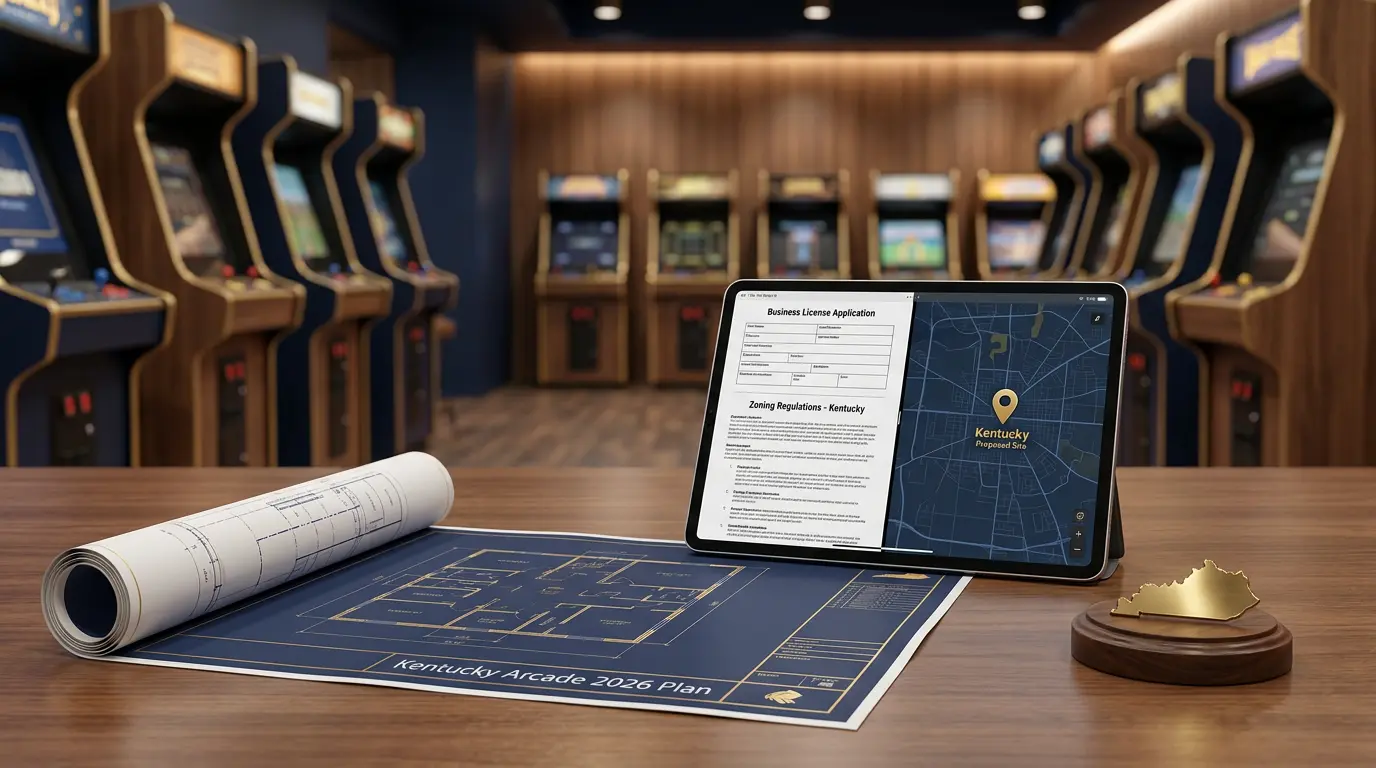
While both states allow nudge games, the technical requirements differ slightly.
- **Pennsylvania:** Often requires a “Tax Decal” and specific reporting of the “Skill-to-Win” ratio. The software must be able to prove that every win was triggered by a player action.
- **Kentucky:** Focuses heavily on the “Incomplete Result” phase. The game cannot “suggest” the move too obviously; the player must find it independently.
The Xtreme Skill 777 is unique because its operator menu allows for “State-Specific Profiles,” making it a versatile asset for route operators moving equipment across state lines.
At first glance, a nudge game board might resemble a classic slot machine. However, the technical architecture is fundamentally different. In a luck-based slot machine, the outcome of every spin is determined the moment the button is pressed by a Random Number Generator (RNG). The player has zero influence over the result.
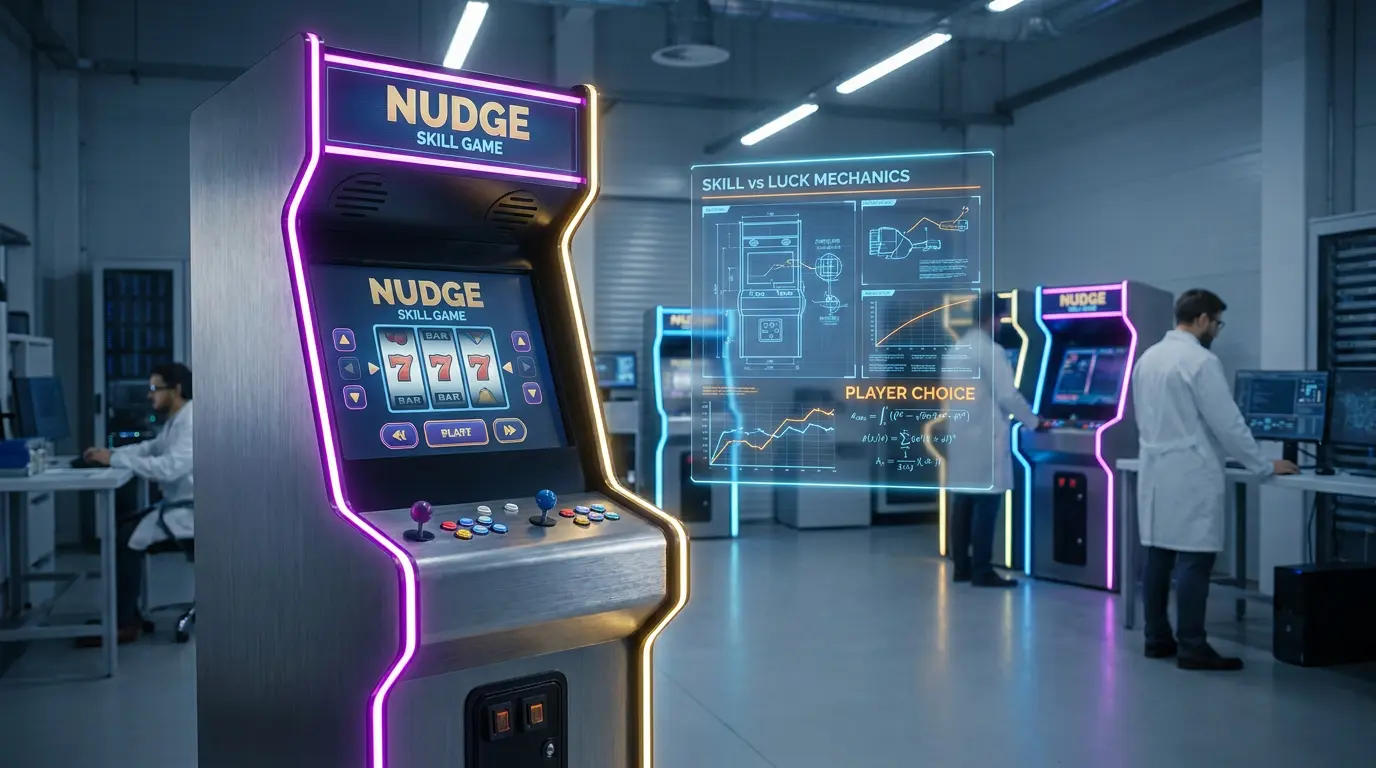
In contrast, a Nudge Game (like the industry-leading Xtreme Skill 777) utilizes an “Incomplete Result” algorithm. When the reels stop, the machine may present a “near-miss” or a specific pattern where a winning combination is not yet formed. It is then up to the player to “nudge” one or more reels up or down to complete the winning line.
The “Dominated by Skill” Principle
From a legal and technical perspective, for a game to be classified as a “skill game,” the outcome must be *dominated* by the player’s physical or mental ability. Nudge games achieve this through:
- **Pattern Recognition:** The player must identify which reel, if moved, will result in the highest payout.
- **Deliberate Action:** No win is awarded automatically. If a player fails to nudge or chooses the wrong reel, they lose.
- **Memory and Timing:** Modern boards often incorporate “pre-reveal” or “follow-the-pattern” features that reward players who pay close attention to the game’s sequences.
Luck vs. Skill: A Technical Comparison Table
To better understand the ROI and compliance advantages, let’s look at the technical breakdown:
| Feature | Traditional Slot Machines | Modern Nudge Skill Games |
| **Outcome Determinant** | Random Number Generator (RNG) | Player Intervention (Skill) |
| **Player Agency** | Passive (Watch and wait) | Active (Identify and nudge) |
| **Win Probability** | Fixed by the house/software | Variable based on player skill |
| **Legal Classification** | Gambling / Class III | Amusement / Skill-Based |
| **Top 2026 Software** | Proprietary Casino OS | **Xtreme Skill 777** / Panda Link |
How Nudge Mechanics Drive Revenue in 2026
For operators, the “Skill” factor isn’t just about legal compliance-it’s about the bottom line. Data from 2025 indicates that players spend significantly more time on machines where they feel they have “control” over the outcome.
1. Increased Dwell Time
When a player knows that their ability to spot a “nudge” opportunity will determine their profit, they enter a state of “flow.” This psychological engagement leads to longer sessions. A standard nudge game like *St. Patrick’s Gold* (featured in the Xtreme Skill 5-in-1 pack) boasts a 40% higher dwell time than traditional Class II machines.
2. Community and Competition
Skill games foster a competitive environment. In Kentucky and Pennsylvania, arcade owners report that “High-Skill Leaderboards” encourage regular customers to return and “perfect” their nudge techniques, creating a stable, recurring revenue stream.
Featured Technology: Xtreme Skill 777
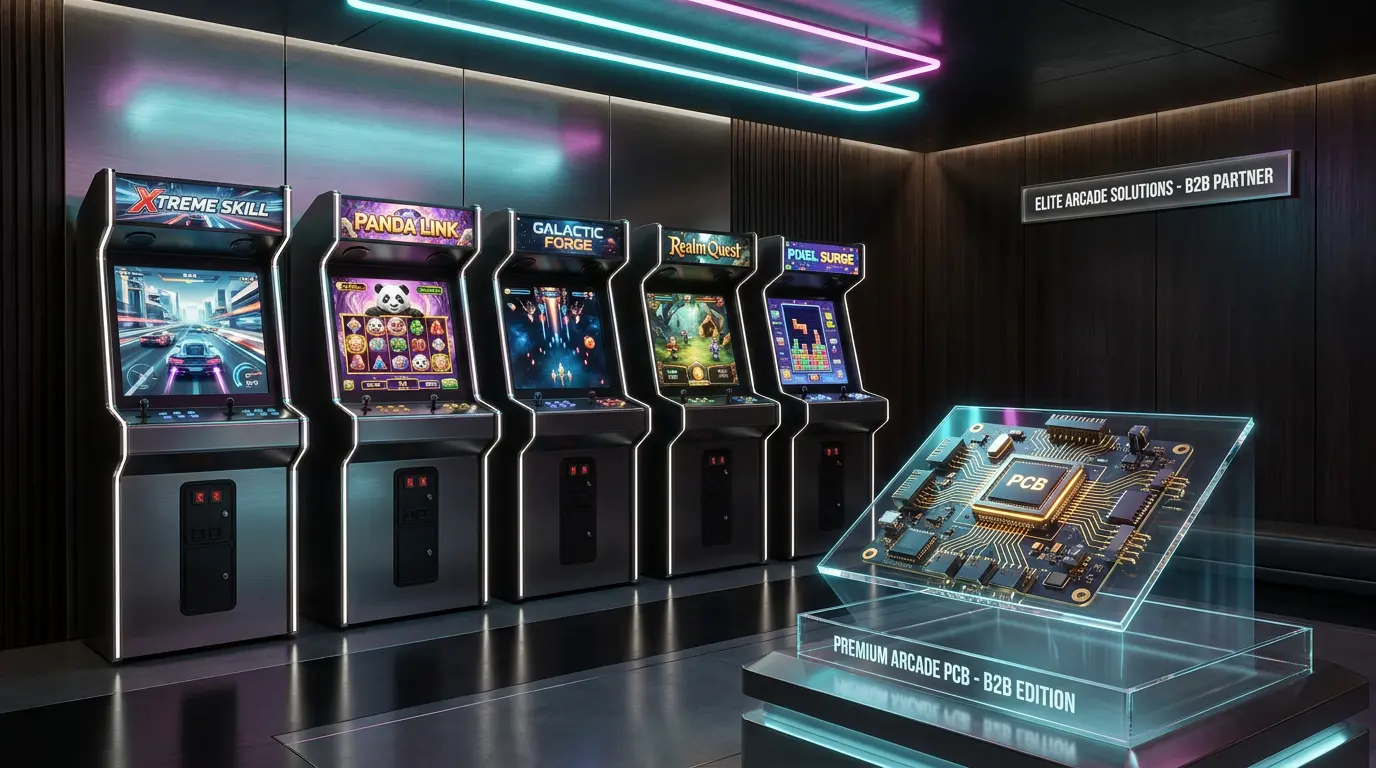
If you are looking for the pinnacle of nudge technology in 2026, the Xtreme Skill 777 is the definitive choice. This system doesn’t just offer one game; it is a 5-in-1 multi-game board that has been engineered to meet the strictest US skill standards.
Why Operators Prefer Xtreme Skill 777:
- **Precision Touch Response:** The nudge mechanic is calibrated for zero-latency touch, ensuring players feel the “weight” of the reels.
- **Dual-Screen Compatibility:** Supports vertical 4K displays for a premium, modern look that attracts younger demographics.
- **Adjustable Skill Levels:** Operators can fine-tune the difficulty to match their local player base while remaining within legal parameters.
Frequently Asked Questions (FAQ)
Q: Are nudge games legal in every US state?
A: Legislation varies by state. However, nudge mechanics are specifically designed to comply with states that distinguish between “games of chance” and “games of skill,” such as Pennsylvania, Kentucky, and Wyoming. Always consult with local legal counsel.
Q: Do players actually need skill to win?
A: Absolutely. On a high-quality nudge board, if the player does not identify the correct reel to move within the allotted time, the potential win is forfeited. This is the core “skill” element that differentiates it from gambling.
Q: What hardware is required for a nudge game board?
A: Most modern boards like the Panda Link or Xtreme Skill use a standard 36/10 pin harness or a VGA/HDMI output, making them easy to install in existing cabinets or new vertical kiosks.
Conclusion: The Future is Skill-Based
As the US amusement market becomes more regulated, the technical mechanics of your games will determine your longevity. By investing in high-quality nudge game boards, you are not just buying “software”-ively, you are buying a compliant, high-retention business model.
Ready to upgrade your floor with the latest skill-based technology?
Contact ProSkillGames today to get a quote on the Xtreme Skill 777 and other industry-leading nudge boards. Our US-based support and original developer pricing ensure you get the best ROI for 2026.
*Keywords: Skill games vs slot machines, nudge mechanics explained, Xtreme Skill 777, arcade game compliance 2026.*